Shadows and Sex
The Real Meaning of Groundhog Day
You don’t need Punxsutawney Phil to know which way the wind blows. Groundhog Day isn’t about shadows or winter or spring. It is about sex. Birds and rodents now begin a season of foreplay.
No, spring is not around the corner, not anywhere on the continent, no matter what you hear from the ceremony in Pennsylvania. Even so, February 2 is indeed significant, falling about halfway between the Winter Solstice and the Spring Equinox, a period celebrated in various traditions from Paganism to Christianity. Early February is when we start to see 10 hours of daylight — a turning point for wildlife.
Black-capped Chickadee
Songbirds cannot rely on the vagaries of weather to trigger their breeding cycles, which must coincide with an abundance of food for their offspring, mostly insects. That happens in May and June here in the north. A January thaw does not trick them into mating. A far more reliable calendar for animals is day length.
It is not entirely clear how birds measure day length, but we do know that photo-receptors in bird brains sense increasing light. It triggers the production of hormones that act like birdie Viagra. Their sexual organs revive from a state of dormancy so that when food is there in May songbirds will be ready … you know, physically.
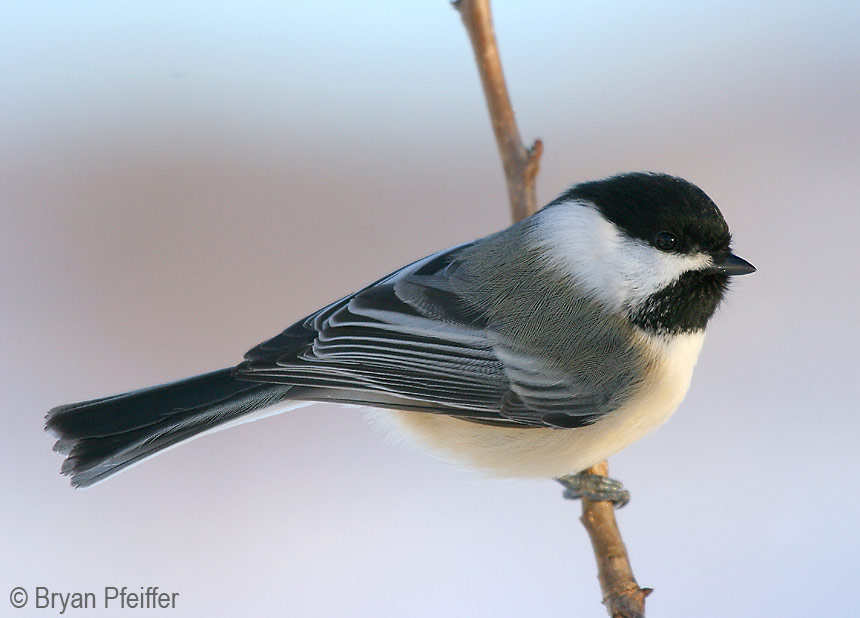
As the days now grow longer, birds begin to prepare to make more birds. It’s why we’re starting to hear Black-capped Chickadees, Tufted Titmouses, Northern Cardinals, House Finches and other birds erupting into song on sunny mornings here in New England.
So why the groundhog as a mascot? Couldn’t we have picked a loftier critter to represent the coming of the light? As it turns out, this rodent is indeed a worthy messenger of spring. All winter long, groundhogs, or woodchucks as we call them, have been alone hibernating in underground burrows. By March they will awaken to begin mating on a schedule so that females bear young during food abundance in May.
But as it turns out, researchers working in south-central Pennsylvania more than a half century ago[1] noticed males out of their burrows for a few hours in the dead of winter. The date: February 2. Female woodchucks were nowhere to be found. At least until a month or so later, when both males and females were out in equal numbers and beginning to breed in earnest.
During “arousal events,” the males seek out females at their burrows — simply for a visit, not much more.
With no food or females available in early February, what in the world would motivate a male woodchuck to wander around in the cold in Pennsylvania? As it turns out, those males are engaged in good old-fashioned courtship: dating.
During what another researcher calls “arousal events,”[2] the males seek out females at their burrows — simply for a visit, not much more. He then heads back to his own burrow for more slumbers. Presumably these courtship visits pay dividends when it comes time to breed later. They might indicate to a female, for example, that he’s tougher than other males. Or perhaps they’re little more than like another February ritual: Valentine’s Day.
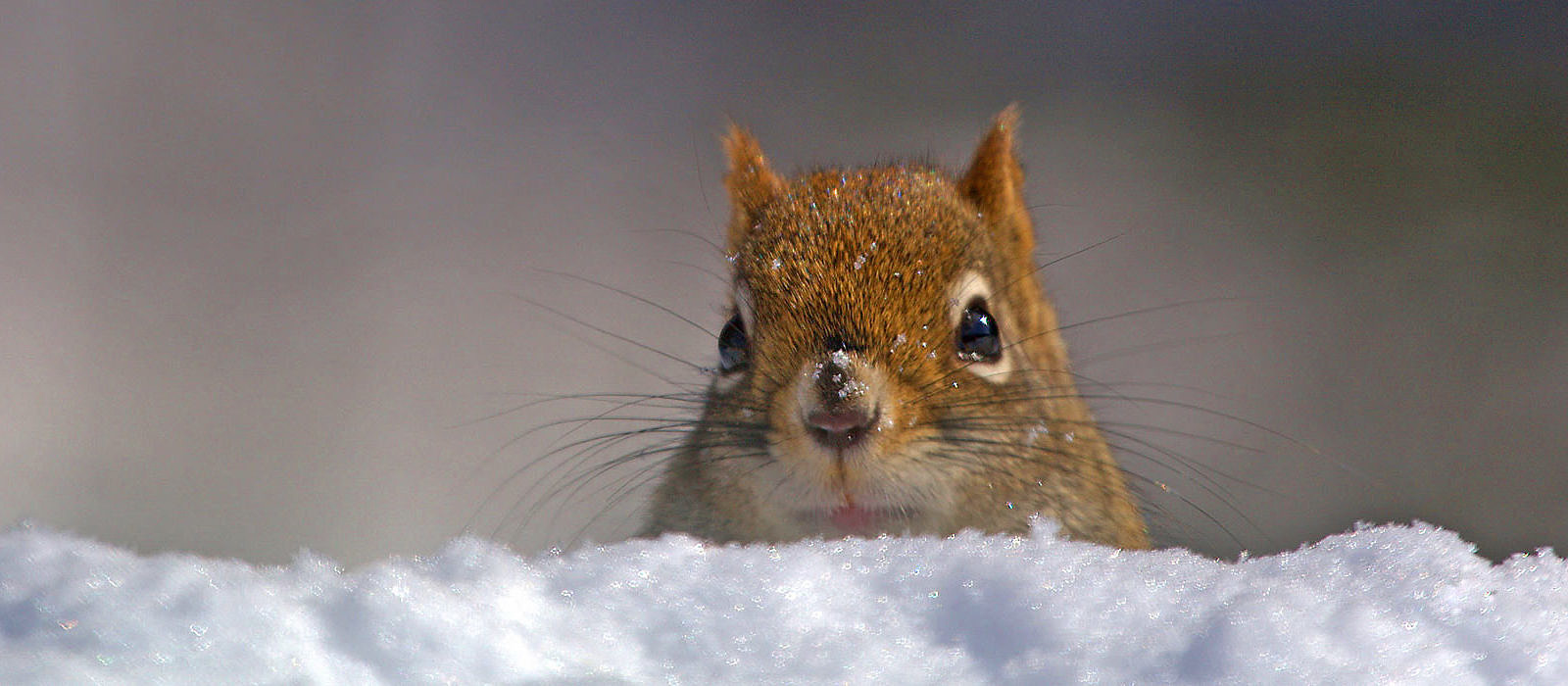
Red Squirrels aren’t nearly as tactful. Unlike their rodent cousins, Red Squirrels do not hibernate; they’ve been out all winter. But as the daylight now advances, females are in estrus, receptive to males for breeding, for only about eight hours on only a single day during this season. And male squirrels outnumber females in the wild by as much as five to one. This is not a civil situation.
The consequence of this skewed gender ratio and limited availability of females is that life during the breeding season can be, to say the least, challenging for the male, to say nothing of the burdens of reproduction that the female must endure. He’ll spend lots of time following a female in the days before she is in estrus. Should the male be too forthcoming, too eager before she is ready, she will rebuff his advances with a swat to the face or a painful bite. (I hate it when that happens.)
And when those precious eight hours finally arrive, a male is hardly alone in this drama. He often must compete with or fight off other males for her affections — which actually amounts to a copulation that might last about 20 seconds. Out there in the trees, it’s a free-for-all. “To the casual observer, what ensues is probably best described as pure and unadulterated chaos,” write biologists Michael A. Steele and John L. Koprowski in their fantastic book, North American Tree Squirrels.
So let’s recognize the real significance of Groundhog Day. This isn’t a holiday about six more weeks of winter. It’s a celebration of light, song, courtship and, if you happen to be a Red Squirrel, unadulterated, chaos.
References
[1] Reproductive Cycle and Litter Size of the Woodchuck. Robert L. Snyder and John J. Christian. Ecology, Vol. 41, No. 4 (Oct., 1960), pp. 647-656.
[2] Male groundhogs hibernate less to visit the ladies. Penn State University. News Release. 24Jan2003.

Hi Bryan. Happy Imbolc. I feel it, don’t you? A little more energy and happiness. Creativity lives with the warmth of sunshine. The LBDs send greetings.
Wonder who it was carrying on at our woods’ edge last night around 9 pm? Sometimes it sounded like a pig, sometimes like a duck. Sometimes a bit of screeching. Definitely more than one. I figured it was someone up there getting romantic. But who?
Where are your woods?
Hi Bryan,
Craftsbury. Randy Raccoons?
Suzanne
Seen ’em?
Raccoons? Sure, in spring when they start eyeing up my chickens. But not sure how loud they get in February.
Your particular slant on Ground Hogs Day is of particular interest and amusement since my birthday lands on that day.
“So let’s recognize the real significance of Groundhog Day. This isn’t a holiday about six more weeks of winter. It’s a celebration of light, song, courtship and, if you happen to be a Red Squirrel, unadulterated, chaos.”
Ground Hogs Day: A celebration of light, song, and courtship… for the honorable Ground Hog/woodchuck. I like it, much better than being a weather forecaster. Unfortunately, I’m not a red squirrel.
Happy Birthday (belated), Ellen! I hope the chickadees and titmice sang their spring songs to you. 🙂
Fabulous photos Bryan. I am living part time at RiverMead, a continuing care community in Peterborough, NH. Got my new Mac down here. I have an independent cottage.
I was home up on Knoll Farm in January and, during the warm spell in January, I had a chipmunk actively gathering seed under feeder for a week. We had no snow so I watch it fill its cheeks and dash into the longer grass just beyond the lawn and dive into its hole. As soon as the cold snap and some snow and ice came it was snug as a hibernating chippy could be. I think it was a female. First time I’ve seen a chipmunk ever for so long a period in January.
HI Bryan I have seen a snowy owl in Irasburg Vt. Ellen
How many babies do squirrels have? Maybe, like bobolinks, one female may be served by several males thus dispersing the genes……Fathers’ Day must be a bit of a joke!
Michael
OK Bryan, now ya gotta explain this. While marooned with a busted canoe in the way backcountry off the Allagash in Maine in mid-May a few years ago i watched a pair of Red squirrels mate for HOURS!
Your essay is highly informative and entertaining. I was left wondering how those red female squirrels were so far out numbered by males. How nice for them.
Hi Susan,
I can’t say exactly why males outnumber females. Lots of evolutionary speculation on that. Perhaps I’ll approach it in another blog. post.
Hey,Brian
A few days ago (I’m in Costa Rica) there were seven Variegated Squirrels squealing so loud at first I thought it was a machine.
Up in the canopy were 7 squirrels chasing each other – then jumping across the path catching branches of another tree and running along all the branches there, then they repeated the cycle, back and forth. This went on for about 20 minutes until they dispersed. Quite the show.
Your blog has shed some light on the happening. thanks!! Martha Pfeiffer (no kin to B)
Sounds like wonderful chaos, Martha. I’m jealous of your trip!
You’re a sly old man you are! Chuckles over coffee. Nice article and shot.
Hi Alan. I was in our old stomping grounds (thought of you down there): http://bryanpfeiffer.com/2014/01/09/surviving-the-polar-vortex/
Great article Bryan….happy day after groundhog day!
wendy sichel
Thanks, Wendy!
Enjoyed reading this. Very entertaining AND educational! Best of both worlds. And hooray for the groundhog.
Thanks, Leigh. As it turns out, the research on those visiting groundhogs comes from PA.
Once again, capturing the essence and educating in one stoke. Genius
This one was fun to write!
Bryan, I have to comment on this great, and informational, story. Just before I saw this, I had observed a couple of red squirrels chasing each other, “playfully”, in the vine on my porch. I thought to myself-“looks like they are “courting”, and now I know they were.
Thanks, Gail. Caught in the act! 🙂
Juncos favorite book: Fifty Shades of Grey, the abbreviated version on Twitter. Erotic Tweets and tweeters.
Thanks for the info Bryan. I didn’t realize the squirrels were hot to breed on only 1 day.
Same goes for chipmunks. Except that the male has to dig himself out of his winter burrow, find the female’s burrow and then tunnel in for, well, you know. If he guesses the wrong day, she’ll turn on him in a big way.
I am always cheered by the chickadee when I hear their sweet Spring song. Thank you again, for sharing your insights with us.
Thanks, Sue!!!
Excellent image of the owl Bryan! Thanks for sharing.
It’s sticking around, Dick. I hope you’ve seen some this winter!